Framing the question
We define the decision that needs making and what kind of answer would change it. The research questions grow out of that — not the reverse.
How we protect it
The question is written down and agreed before fieldwork starts.
Method
We don't turn research into a methodology textbook. Below is exactly what happens at each stage and how we protect the quality of the findings.
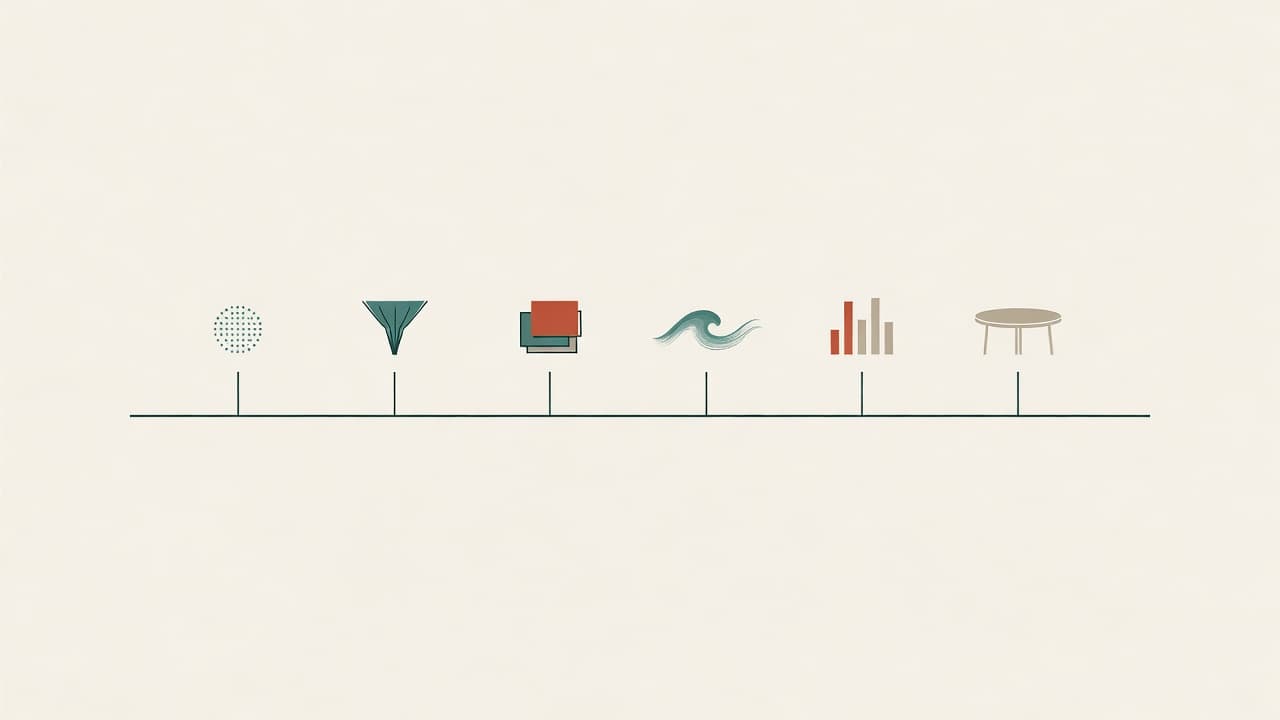
We define the decision that needs making and what kind of answer would change it. The research questions grow out of that — not the reverse.
The question is written down and agreed before fieldwork starts.
We match the method to the decision and its constraints: qualitative fieldwork, a combination with quantitative validation, or interviews alone.
We explain what the method will show — and what it won't.
We select on real experience and role in the decision, not on willingness to participate. We work with your base and with external recruiting.
The screener and quotas are agreed with you.
A researcher follows the guide but is free to follow a thread when it starts to mean something. You're welcome to observe.
Recordings only with the respondent's consent.
We code the answers, count frequencies and separate what is confirmed from what was heard once.
Every finding comes with a frequency and a quote.
We discuss the findings with your team and turn them into decisions and priorities — before the report goes into an archive.
Decisions are recorded in the session notes.
Qualitative research shows causes and logic, but it doesn't give you market statistics.
We don't promise “100% accuracy” and we don't bend findings to fit expectations.
If the data isn't enough for the decision, we say so and propose the next step.
Interviews give depth and direction. If you need statistical representativeness, we add a survey — and we say so before the start, not in the conclusions.
At the intro call we'll tell you what the method will show — and what it won't.